Phyllocnistis saligna/asiatica
Phyllocnistis saligna/asiatica
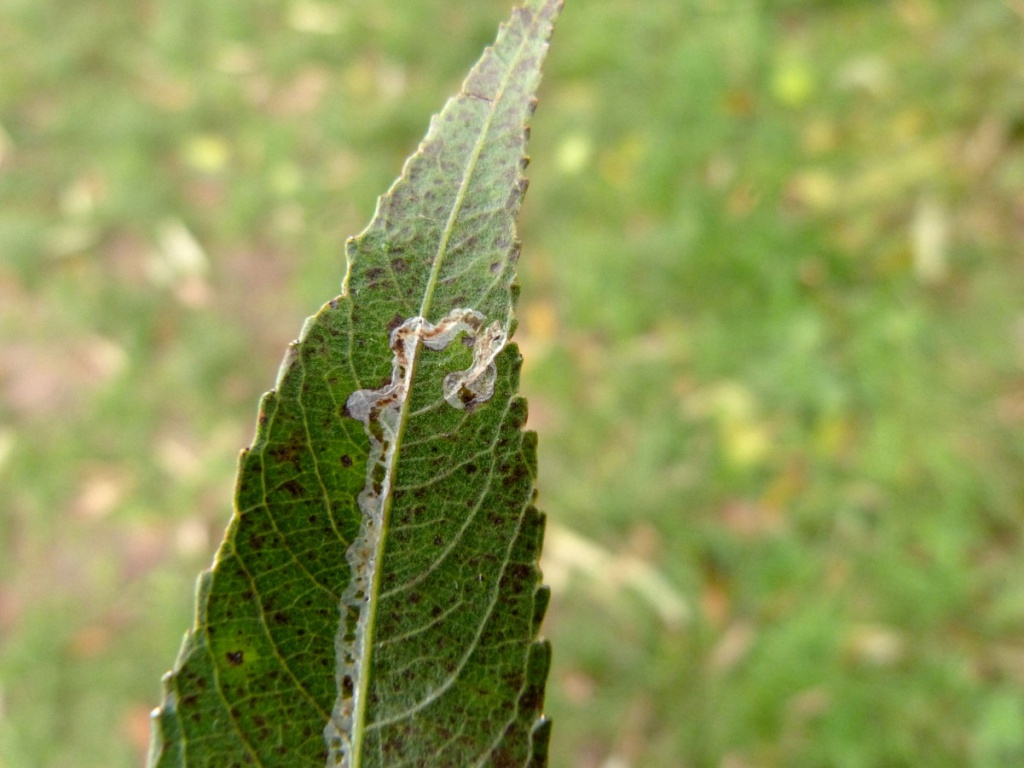
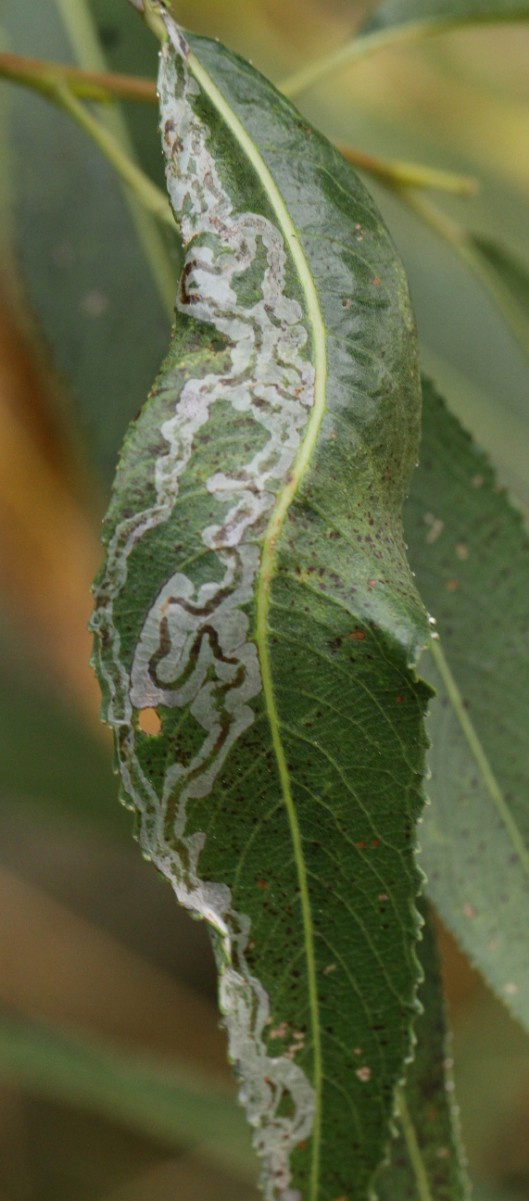
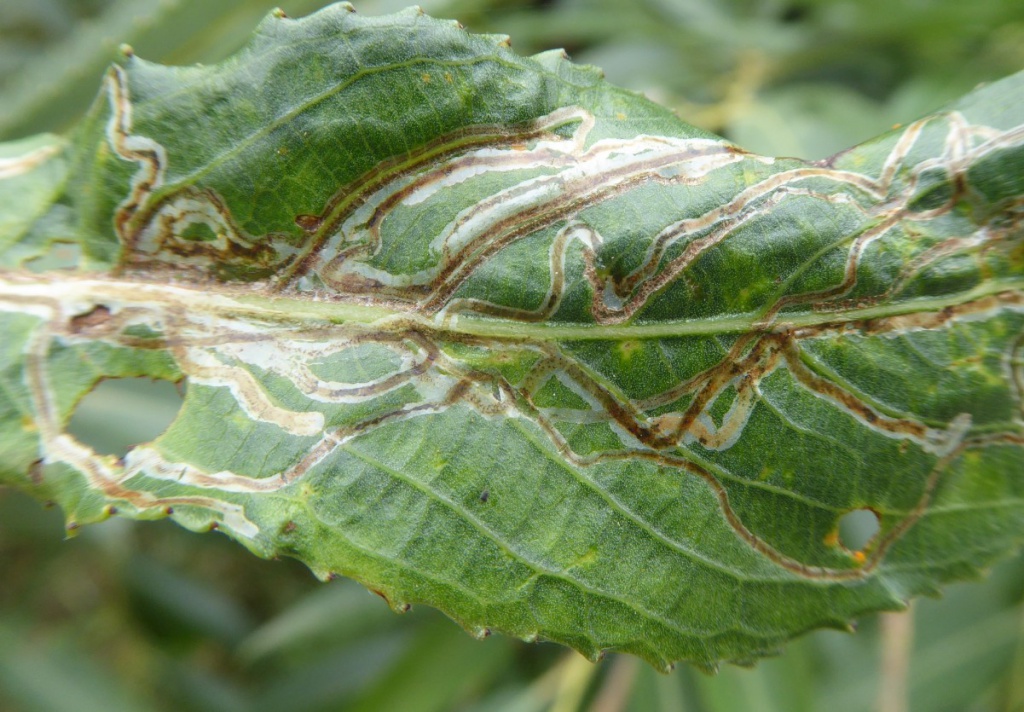
A tiny, pale coloured moth with a wingspan of about 7 mm. The larvae mine the leaves and twigs of smooth narrow-leaved willows, creating a silvery 'snail-trail' mine. Phyllocnistis saligna and Phyllocnistis asiatica are part of a species complex, which is not yet fully resolved.
Adult  Leafmine

The host should be identified where known; where mines are thought to be on Purple Willow the host must be explicitly confirmed. Photos/details should confirm the morphology of the mine (upper/lower or both surfaces, mine into petiole and stem or just in leaf, mine enters second leaf?). Early stage mines may be inconclusive.
Where smooth-leaved willows are present.
Adult moths are at large in two generations, in July and from September through to April. The overwintering adults are sometimes found in thatch or haystacks. Larval mines are best looked for in June, or in August/September.
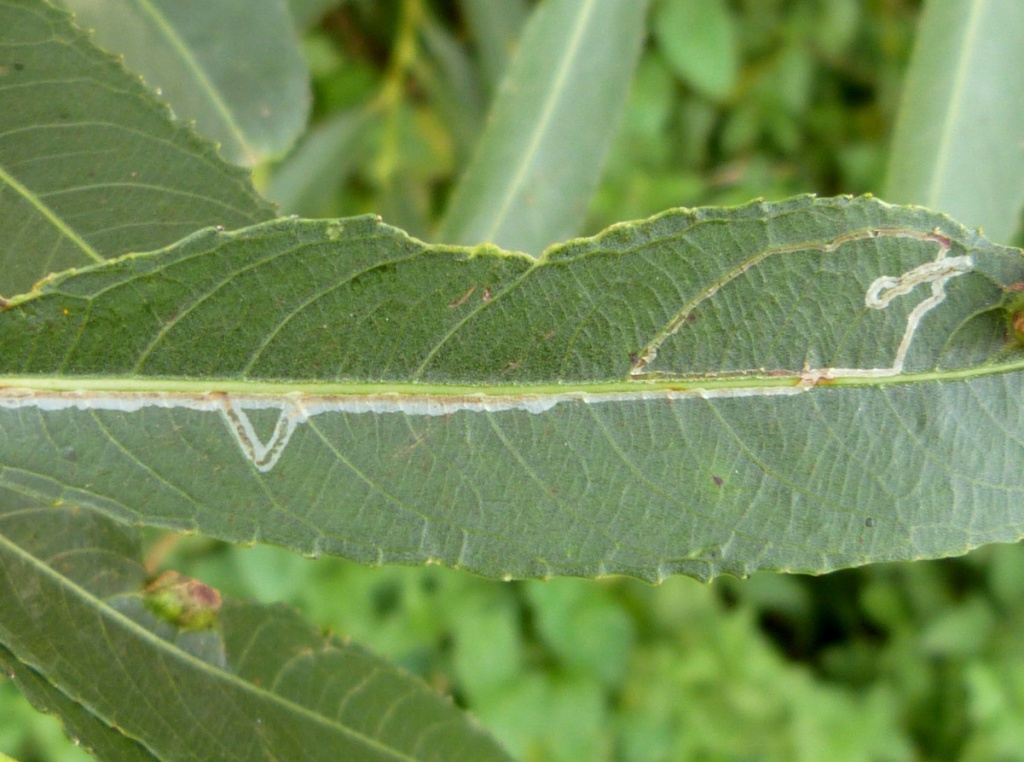
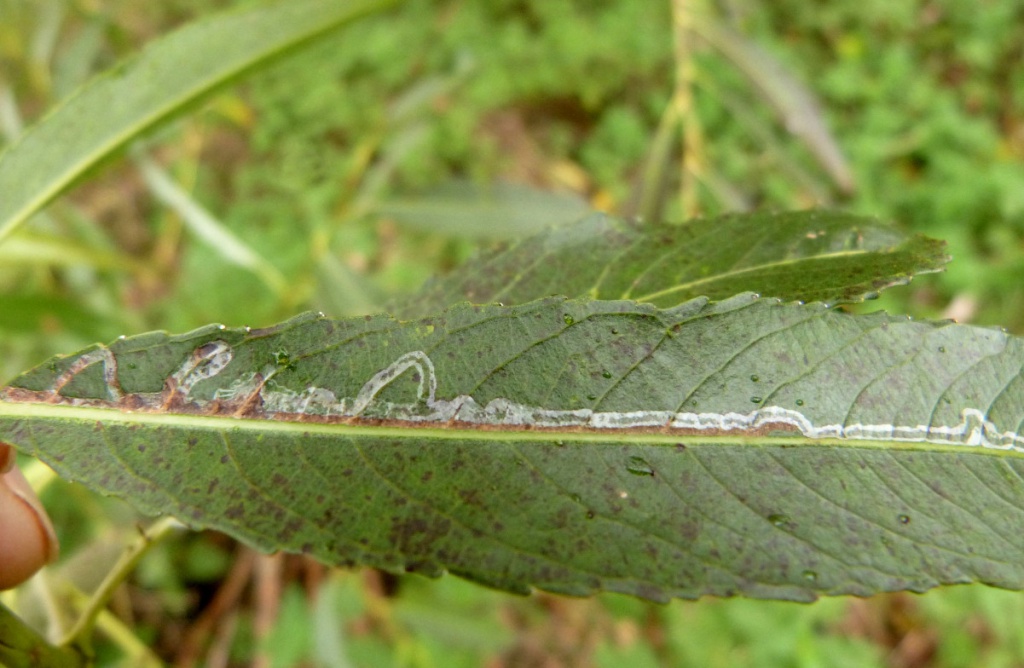
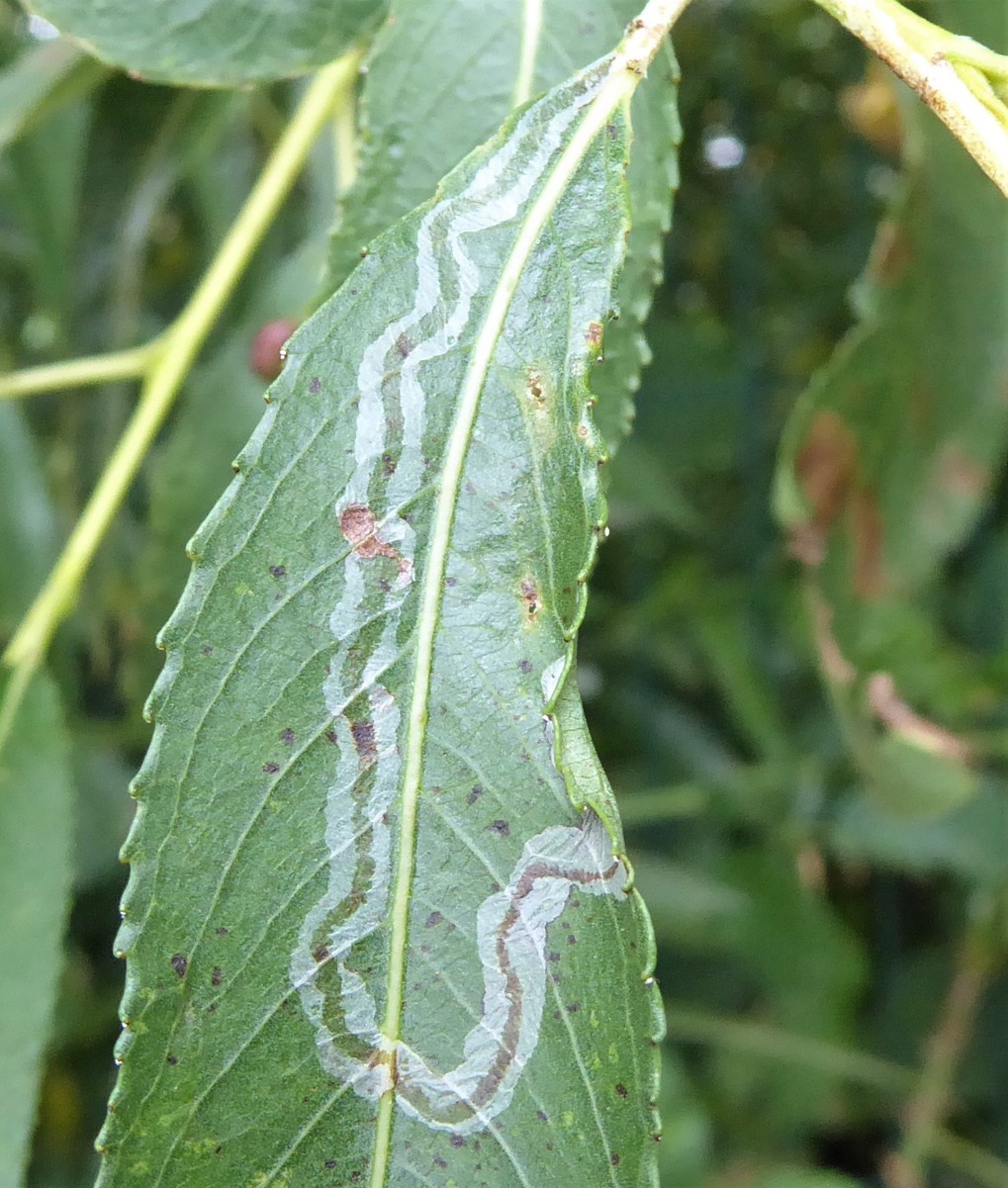
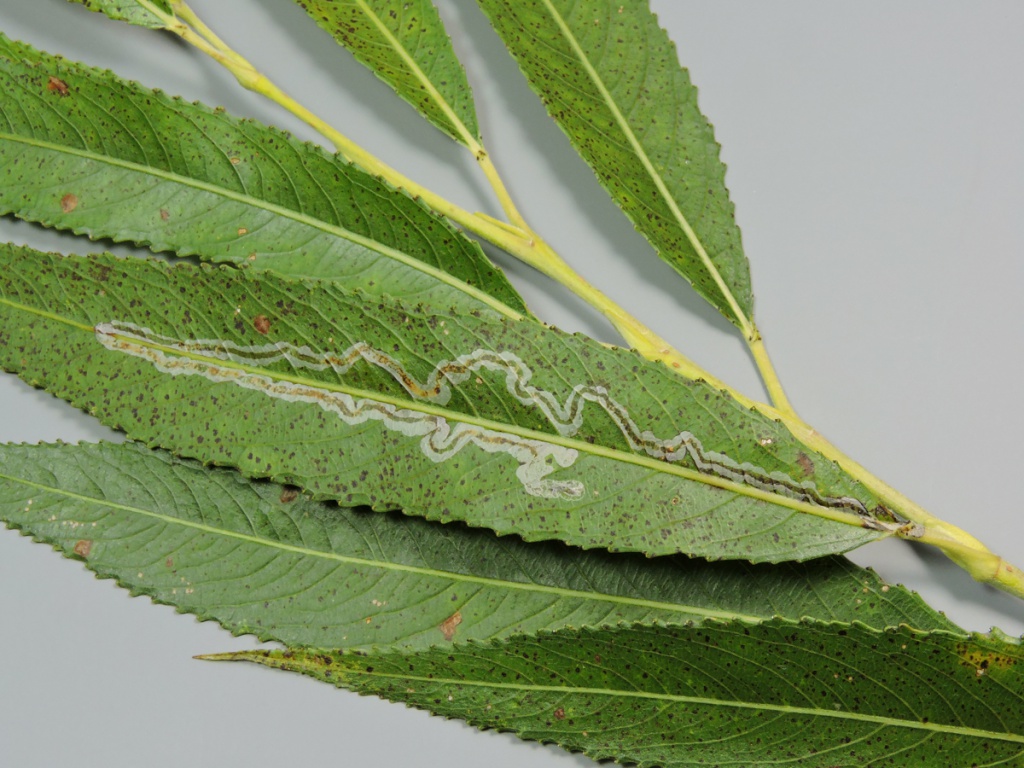
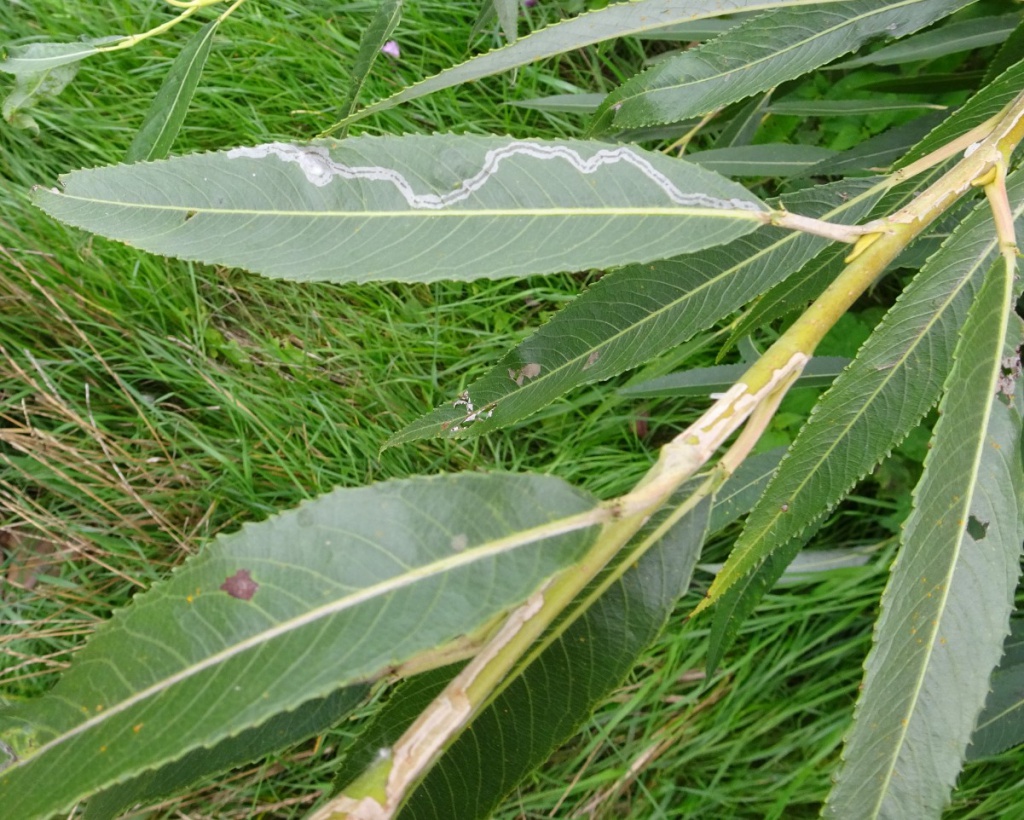
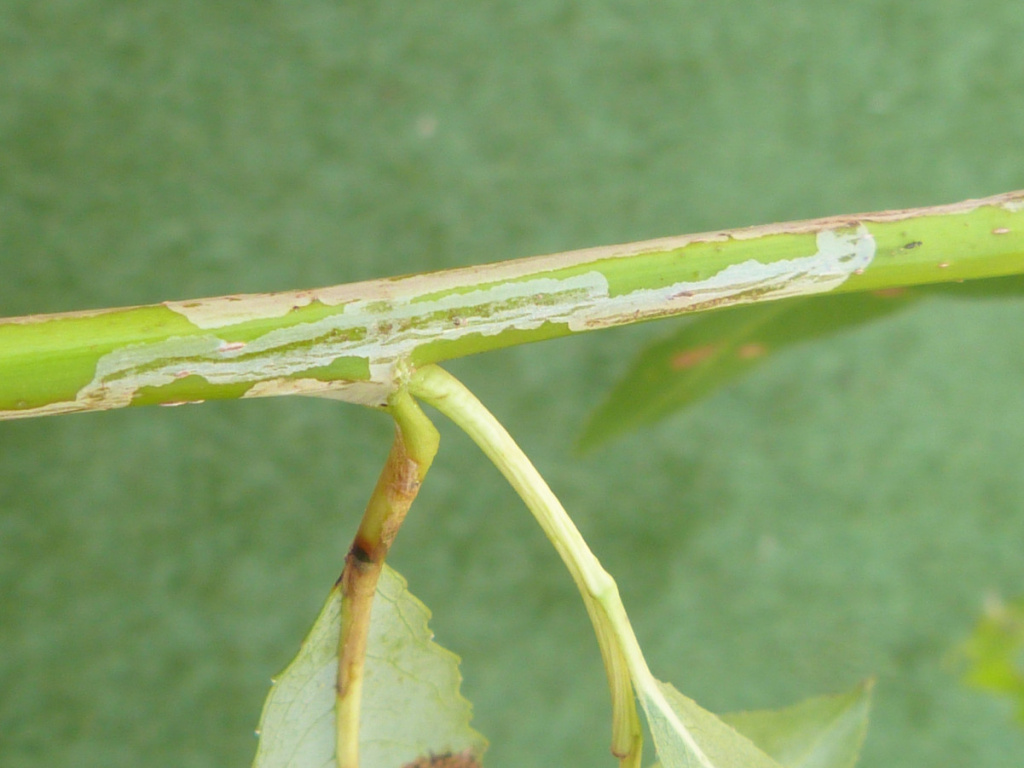
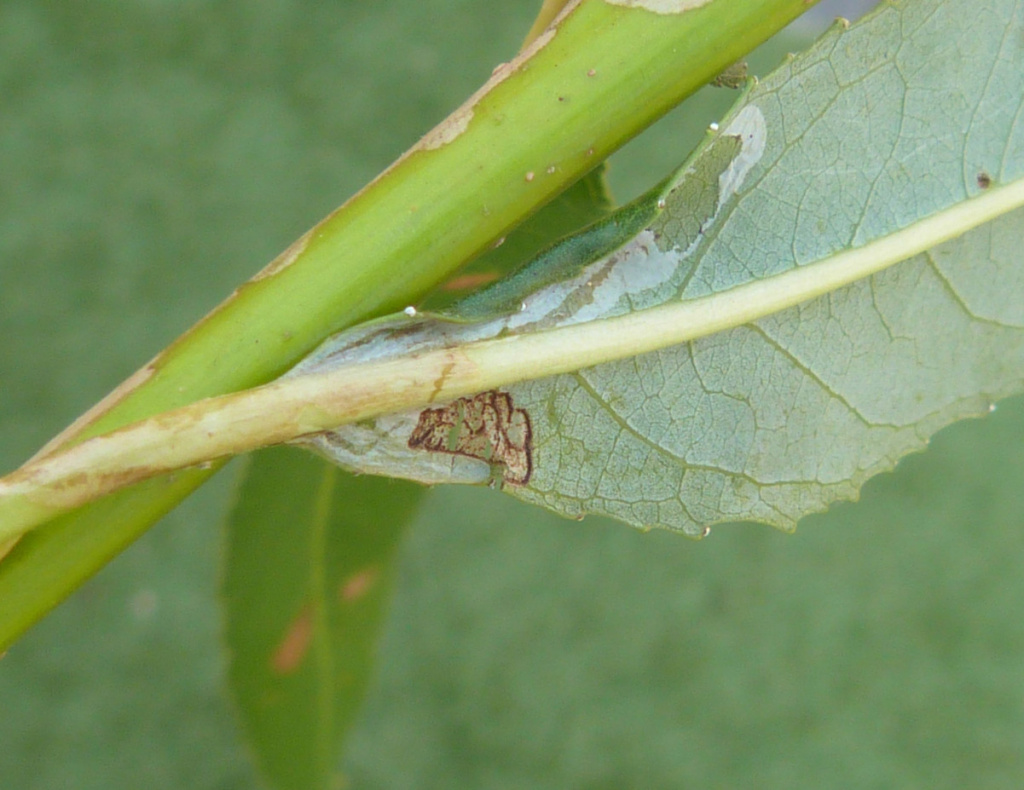
The larva mines the leaves of various smooth-leaved Willows, causing a thin silvery mine like a snail-trail in the upper epidermis of the leaf, and continuing down the twig to mine another leaf. Pupation is under a leaf-fold at the edge of a leaf.
P. saligna has been shown to be a complex of several species, and it is likely that most (all?) VC55 records are actually referable to P. asiatica. The status of both species is under review, via both host species and mine morphology, along with DNA analysis. In the meantime, where no dissection of an adult female has been completed, records should be entered as P. saligna/asiatica agg.
Common as a species complex in Leicestershire and Rutland, and increasingly well recorded from the leafmines on smooth-leaved willows such as Crack-willow, White Willow and Weeping Willow.
Phyllocnistis saligna is in fact a complex of four species, recently discovered by DNA analysis. P. asiatica is the species recorded on White Willow and Crack Willow. P saligna is the species recorded on Purple Willow. VC55 records where the host species is not known are likely to be P. asiatica. See Edmunds, R. & Plant, C. (2023) Phyllocnistis saligna (Zeller, 1839) (Lep.: Phyllocnistinae) is a complex of species. Which of these occur in the UK?. British Leafminers 43 1-2. http://www.leafmines.co.uk/pdfs/newsletter%2043.pdf:
 Mark Skevington
Narborough Bog
19 August 2017
leafmine on Crack-willow- Mark Skevington
Narborough Bog
19 August 2017
Mine on willow  Mark Skevington
Narborough Bog
19 August 2017
Pupation fold on leaf edge- Mark Skevington
Narborough Bog
19 August 2017
Pupation fold on leaf edge  Mark Skevington
Narborough Bog
19 August 2017
Showing pupal exuviae Mark Skevington
Narborough Bog
19 August 2017
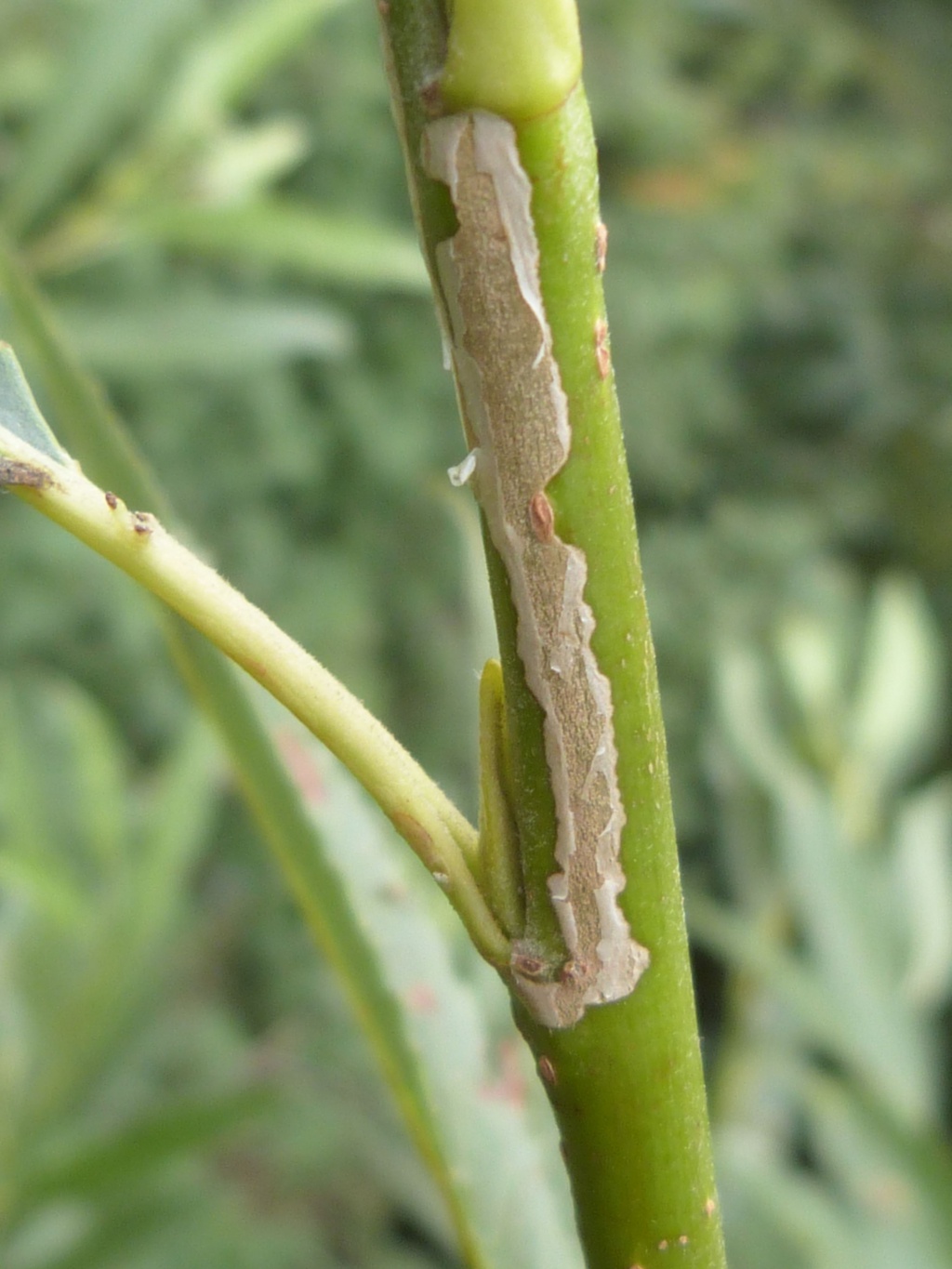
Showing mine into petiole and stem- Mark Skevington
Narborough Bog
19 August 2017
Showing mine into petiole and stem - Mark Skevington
Narborough Bog
19 August 2017
Showing pupal exuviae 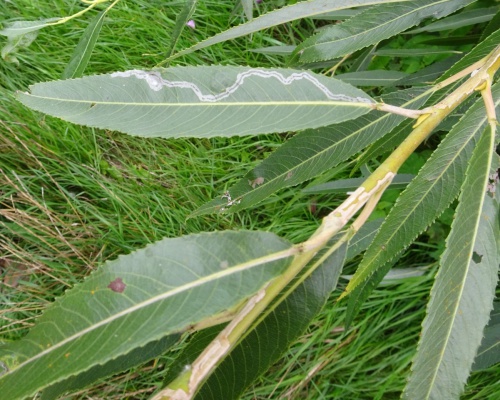 Hazel Graves
Aylestone Meadows North
18 September 2022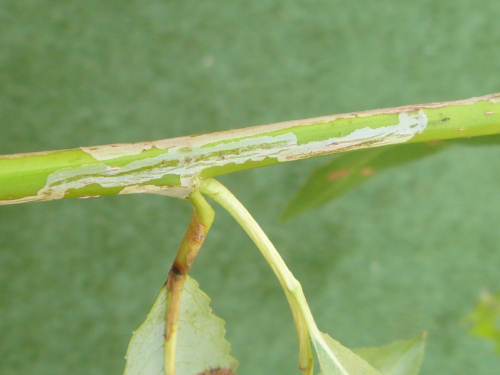 Graham Calow
Elmesthorpe, Station Road
06 September 2024
leafmine on Hybrid Crack-willow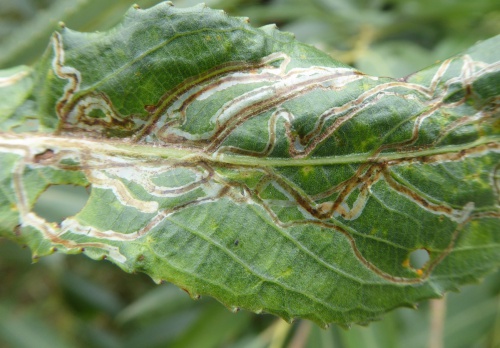 sue
Willesley Wood
18 August 2018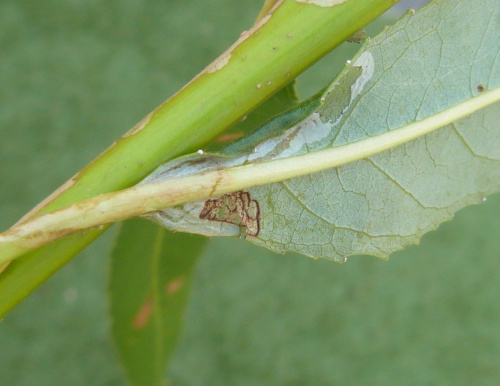 Graham Calow
Elmesthorpe, Station Road
06 September 2024
leafmine on Hybrid Crack-willow


Leicestershire & Rutland Map
Enter a town or village to see local records
MAP KEY:
Yellow squares = NBN records (all known data)
Coloured squares = NatureSpot records: 2025+ | 2020-2024 | pre-2020
UK Map
Additional images