As AI image-enhancement creeps into photography, new dangers arise. More...
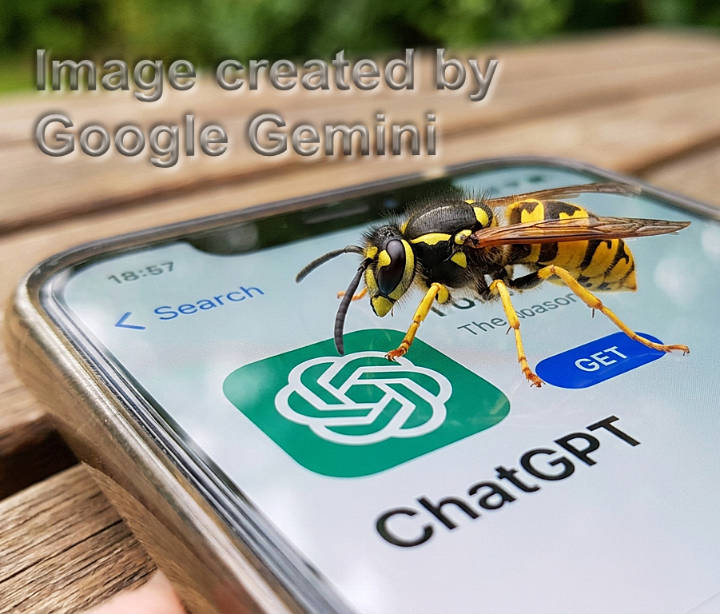
This image was generated by Google Gemini using the prompt "Generate an image of Vespula vulgaris sitting on a mobile phone displaying the Chat GPT logo on the screen". The wasp is not real, neither is the mobile phone.
Online biological recording heavily relies on visual evidence. Thousands of naturalists upload photographs daily to platforms like NatureSpot and iRecord. These platforms are crucial for modern ecological monitoring, enabling researchers to map biodiversity, track invasive species, and study climate change impacts. However, the rapid rise of automated photo enhancement tools threatens this scientific foundation. AI photo enhancement operates differently from traditional photo editing. Unlike adjusting contrast or brightness, generative AI and "smart" cleanup features invent details which do not exist. When asked to "sharpen", "denoise", or "remove an obstructing leaf", the algorithms hallucinate plausible pixels. In wildlife photography, minute features like a butterfly wing pattern, a bird wing colouration or a plant leaf veins can distinguish between common and rare species. An AI tool "helpfully" aiming to improve an image can inadvertently alter these features, transforming one species into another without the photographer's intention. This silent mutation creates a risk of data contamination. If AI-altered images pass validation checks, they introduce erroneous spatial and temporal records into global biodiversity databases. The danger of AI extends beyond individual records. Computer vision systems trained to identify organisms automatically are fed millions of verified user-submitted photos. If synthetic or heavily modified images taint these training datasets, the computer vision models learn false morphological traits, compounding identification errors. In many ways an imperfect, fuzzy photograph is more valuable than an AI-perfected illusion.
The proliferation of AI-enhanced imagery poses a systemic risk to data integrity, undermining the very platforms that underpin biodiversity research. Without robust safeguards such as mandatory logging of AI editing and transparent disclosure of enhancement methods we risk eroding trust in scientific data. As AI tools become ubiquitous, the biological recording community must act to establish ethical guidelines and technical standards that preserve the authenticity of observational data. The alternative, an ecosystem of AI-generated illusions masquerading as reality, could render decades of ecological monitoring uncertain, leaving researchers blind to the crises they seek to address.