Hypoponera punctatissima
Hypoponera punctatissima
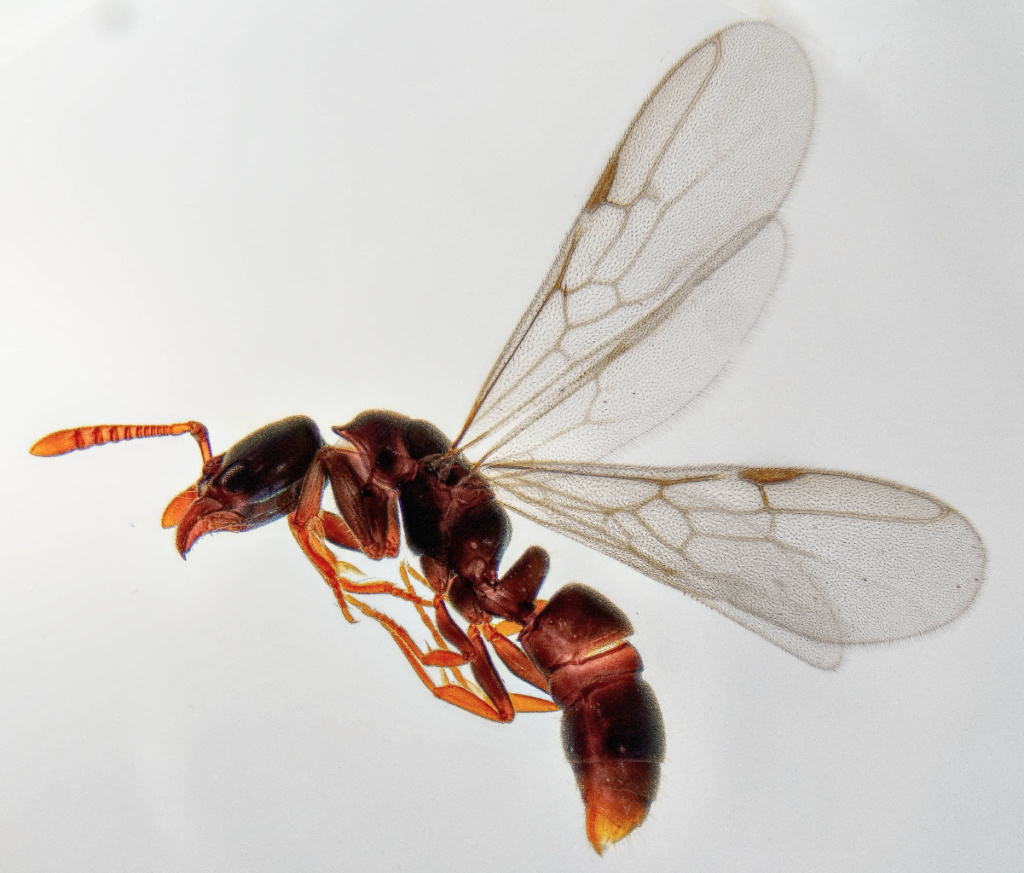
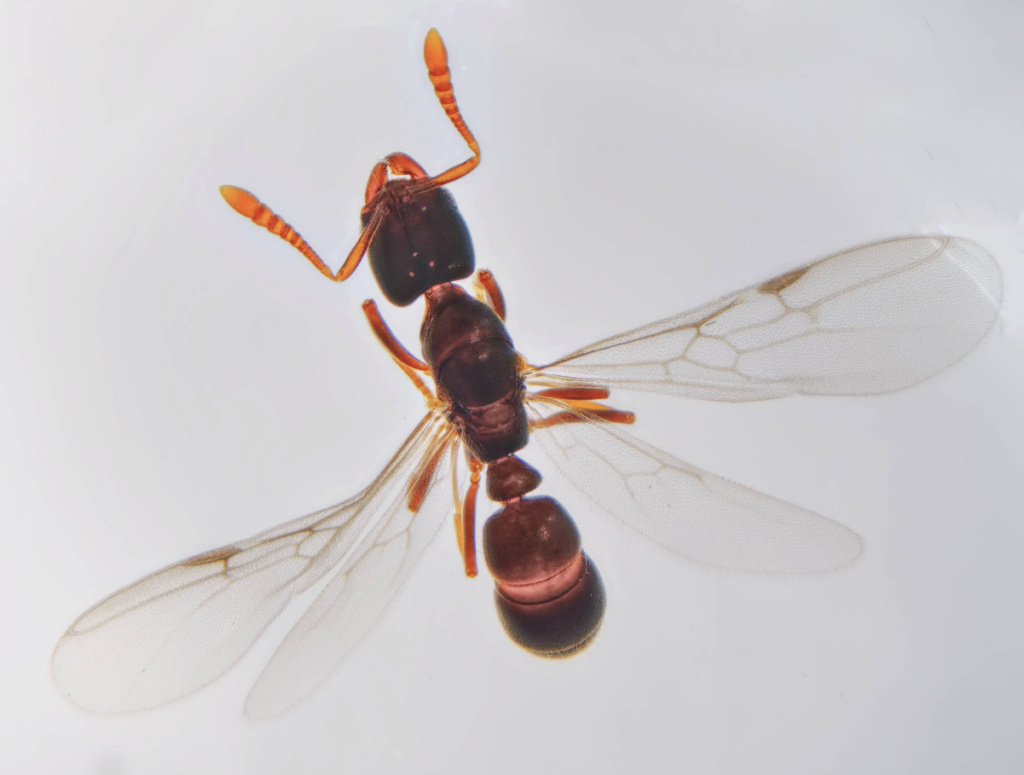
Workers: Small, measuring about 2.5-3mm. Colour ranges from dull brownish-yellow to dark brown or nearly black (lighter in smaller workers, darker in larger ones). Eyes very small (1 to 6 poorly defined ommatidia in workers), positioned far forward on the sides of the head.
Queens: True queens are winged (alate) and larger (about 3-3.5mm) with prominent eyes (>50 ommatidia). Ergatoid (worker-like) queens also occur, featuring intermediate eyes (10–20 ommatidia).
Males: Wingless and dimorphic (either large and dark brown, or small and yellow).
All have a single, thick petiole node (a single hump between the thorax and the gaster/abdomen). Antennae with 12 segments with a gradual apical thickening (no sharply defined club). Fine, dense punctate surface pitting is visible under high magnification across the head and body (giving the species its name).
Differentiating H. punctatissima from close relatives like H. ergatandria or H. eduardi requires microscopic measurements comparing head width and scape length, as well as checking the deep metanotal groove on the mesosoma.

Unless identified by a recognised expert, a photo is required and the specimen should be examined with a microscope. In the comments box, state the key or ID method used and describe the size and identifying characters.
Found underground in rotting wood, compost, sawdust heaps, or under stones; in cooler countries, they congregate near artificial heat sources like boiler rooms, hospitals, and commercial greenhouses (optimally needing temperatures around 21°C or higher).
Carnivorous foragers feeding on tiny soil arthropods.
Widely distributed but not common. A tramp species that has spread throughout the world following the spread of humans.
Uncommon.
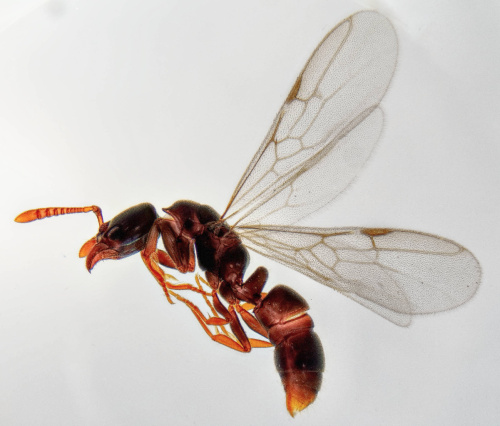 Graham Calow
Sapcote, Harecroft Crescent
22 September 2026
specimen examined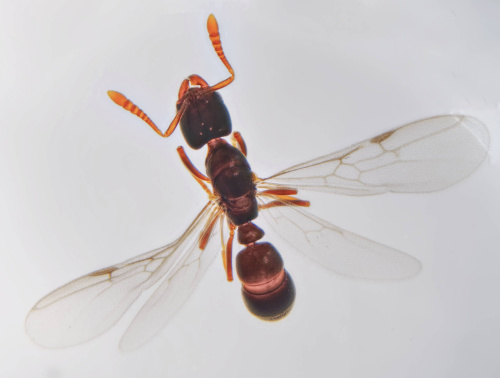 Graham Calow
Sapcote, Harecroft Crescent
22 September 2026
specimen examined
Leicestershire & Rutland Map
Enter a town or village to see local records
MAP KEY:
Yellow squares = NBN records (all known data)
Coloured squares = NatureSpot records: 2025+ | 2020-2024 | pre-2020
UK Map
Additional images
No additional images available for this species.