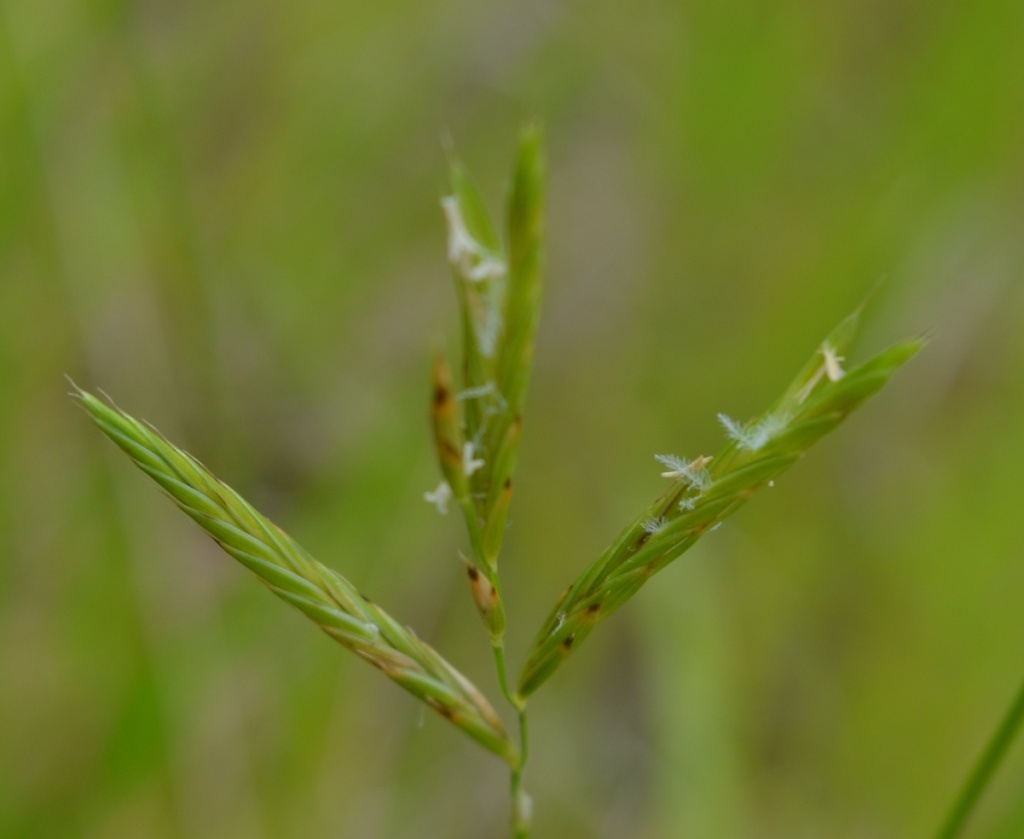
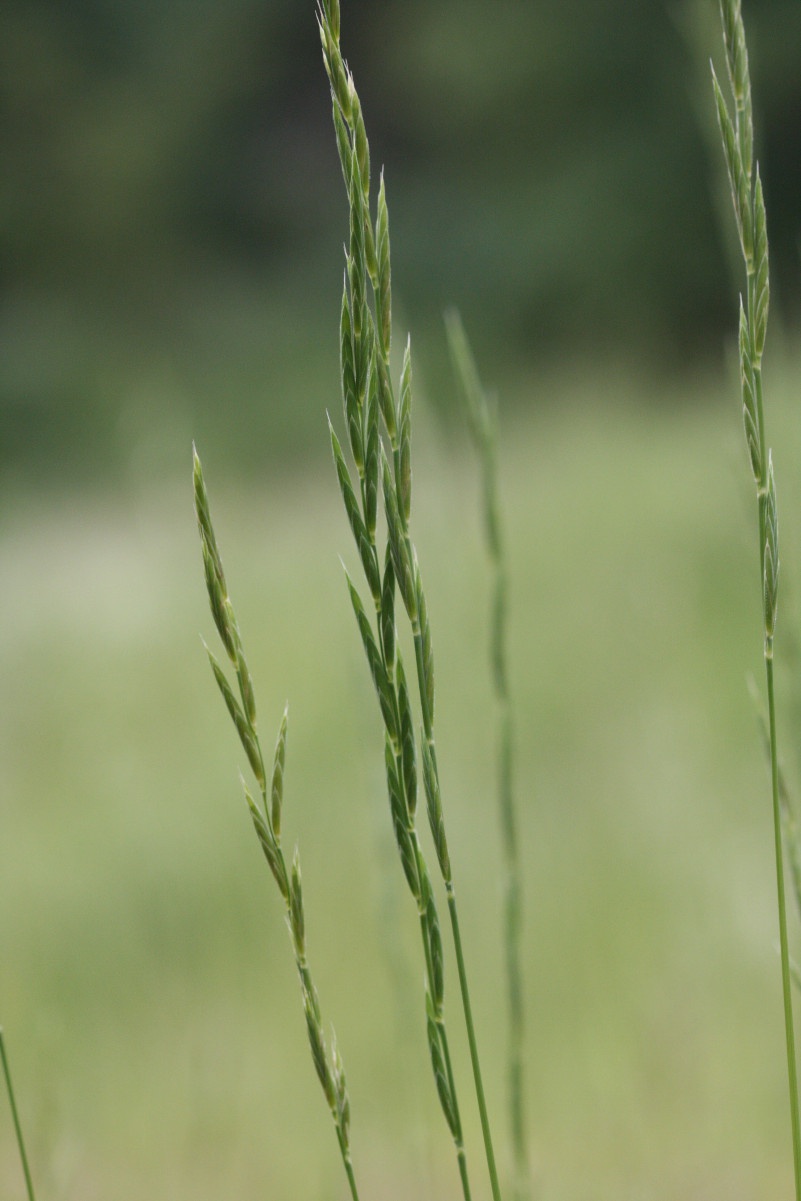
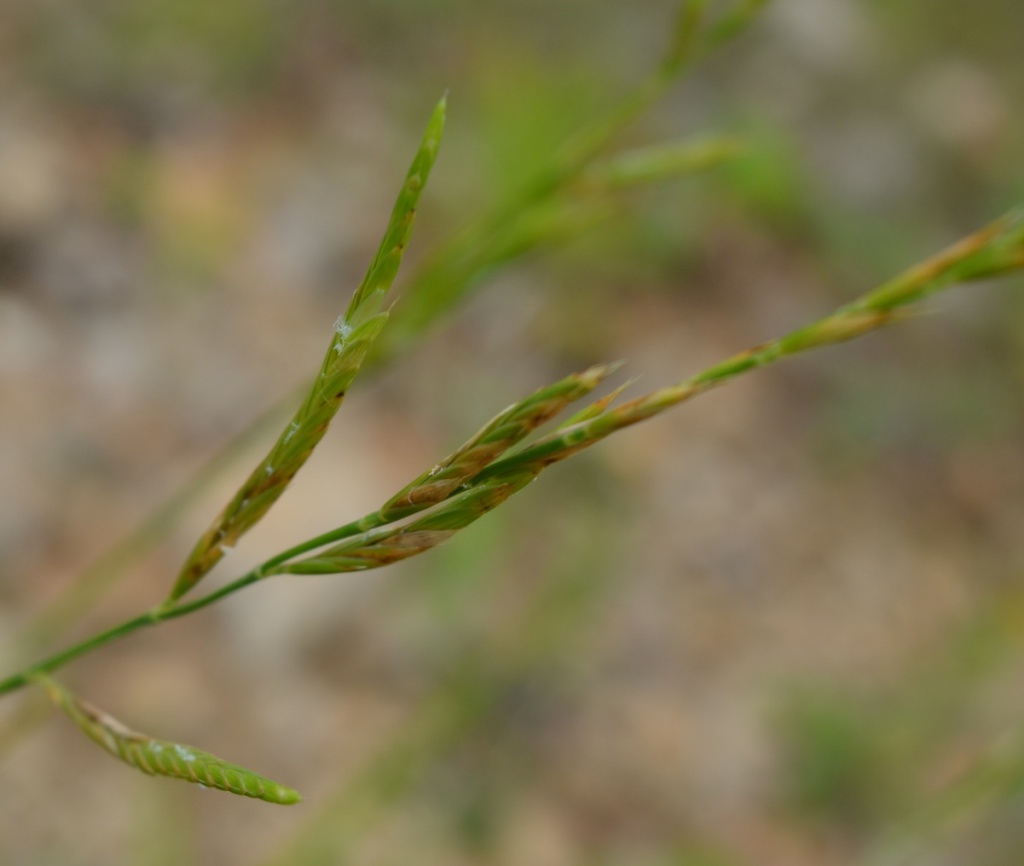
Brachypodium pinnatum sens. lat.
Brachypodium pinnatum sens. lat.
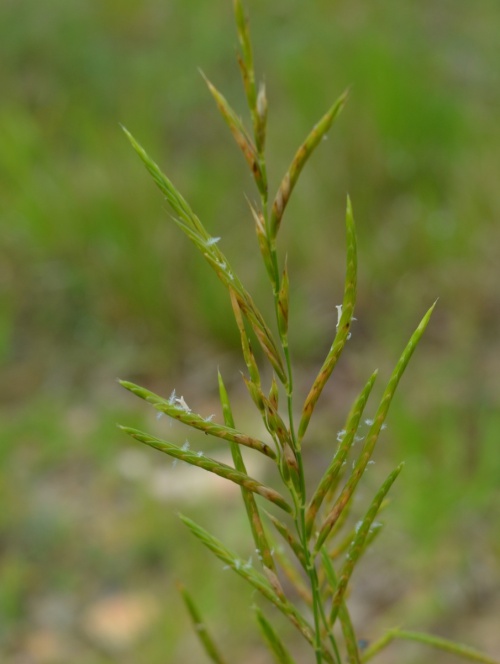
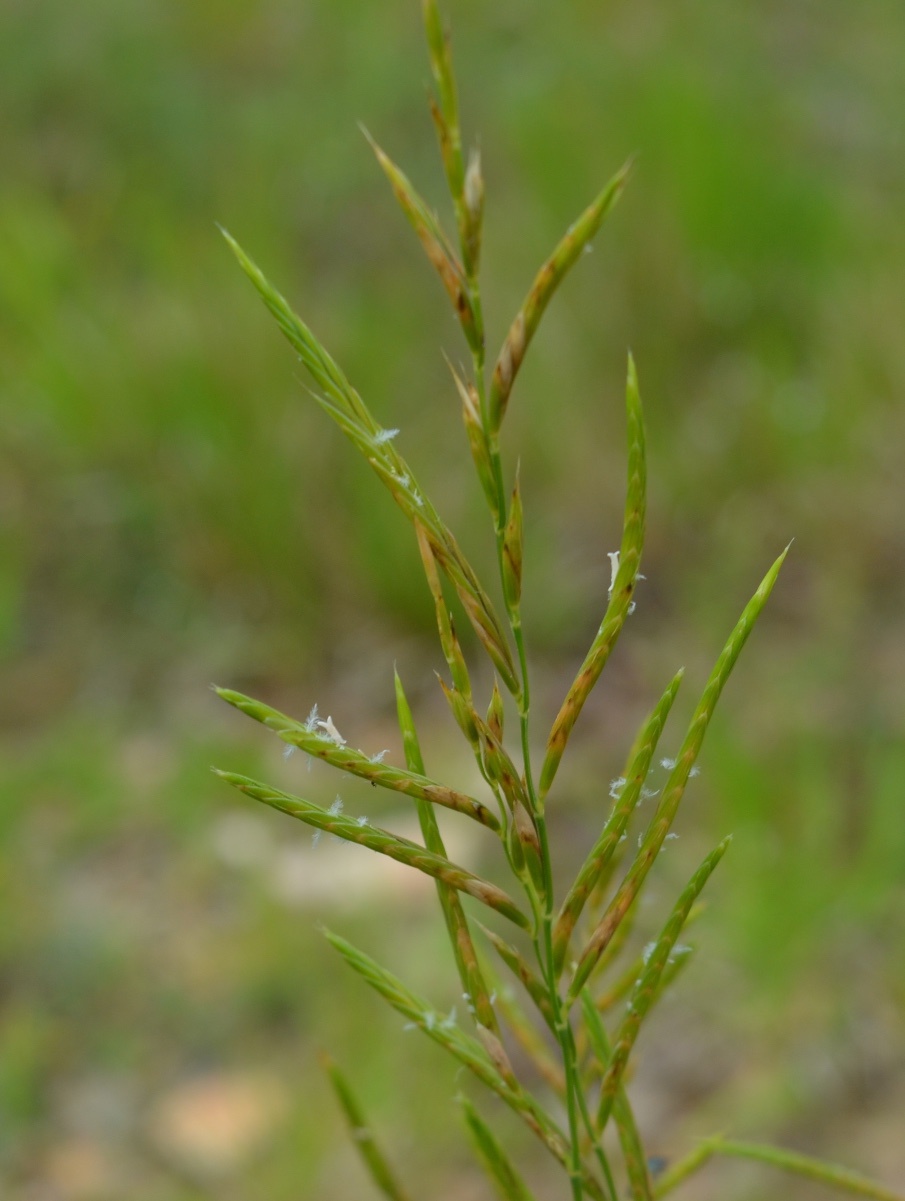
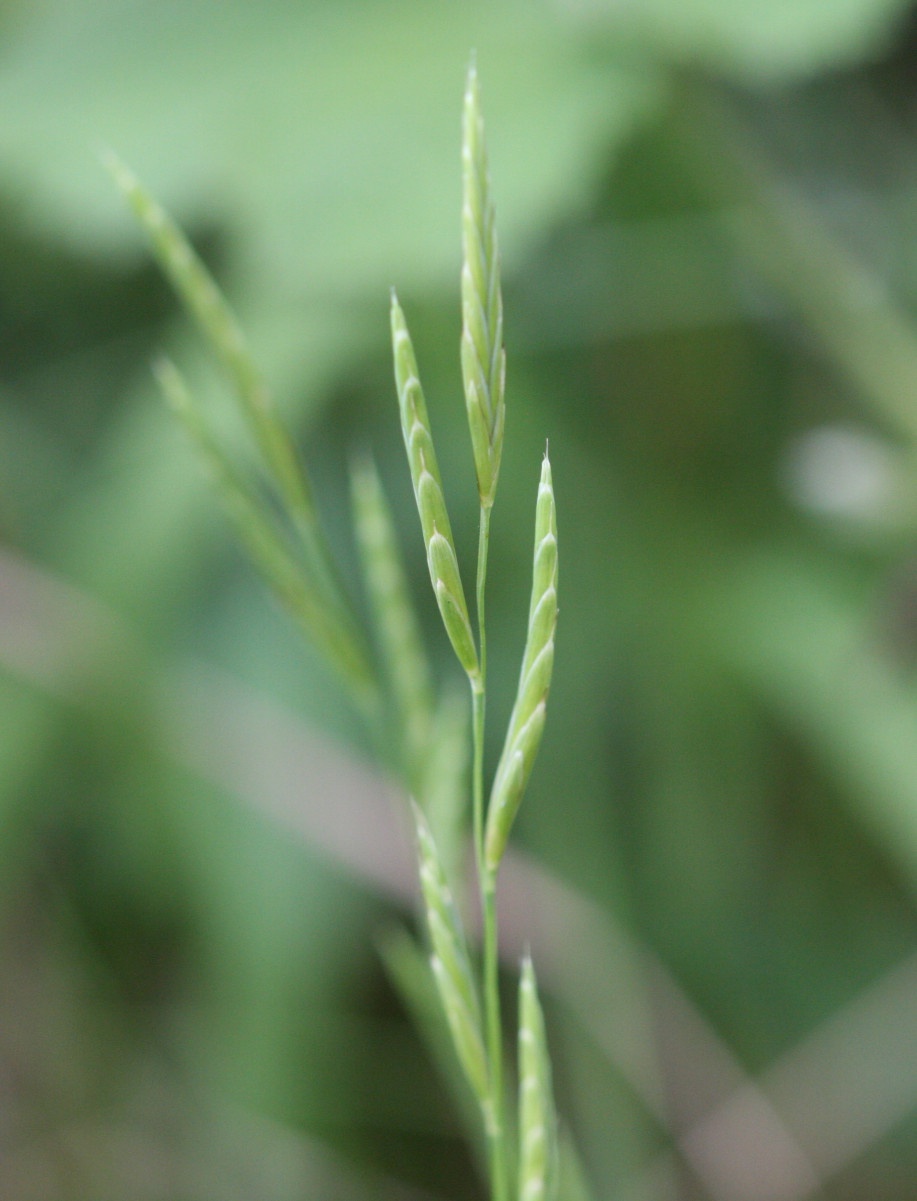
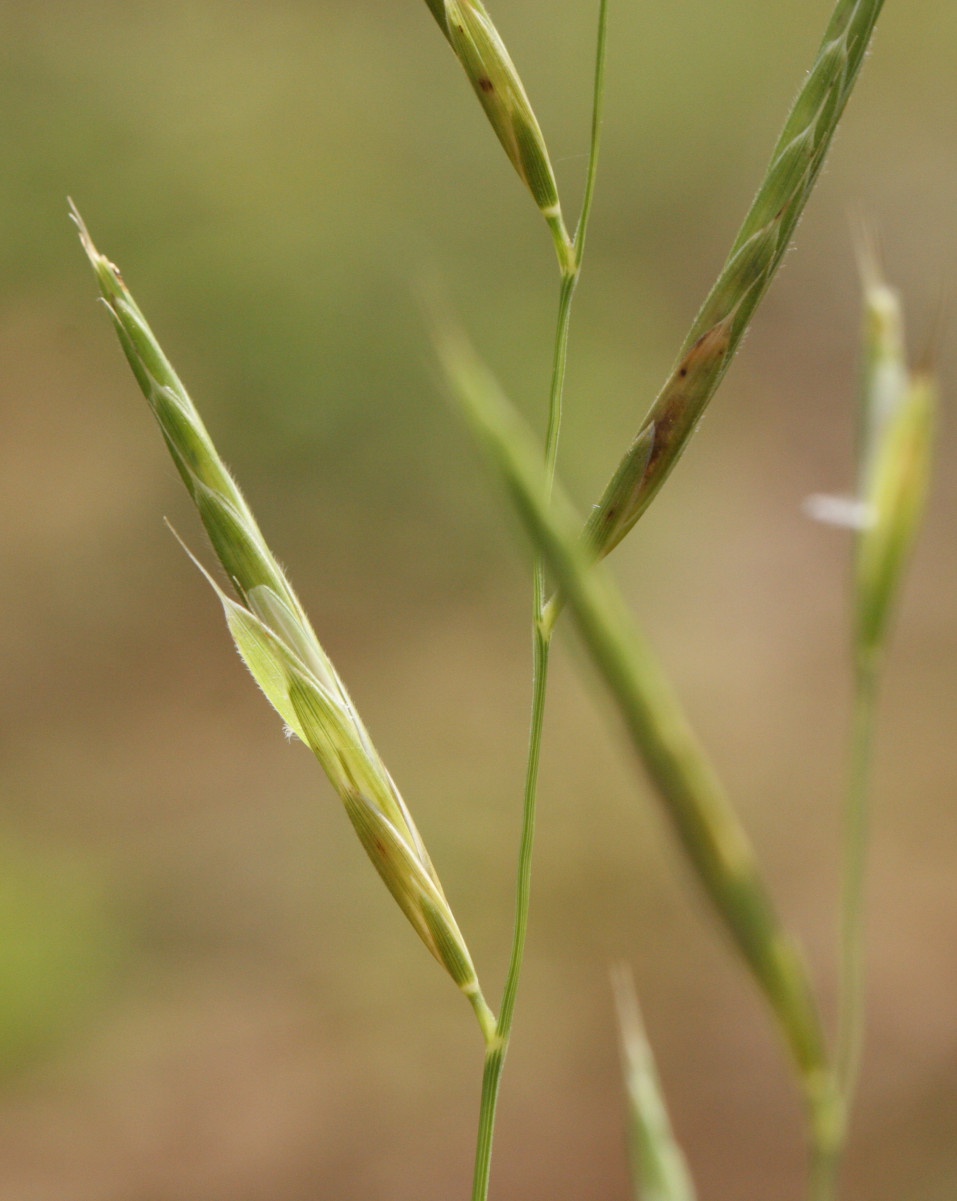
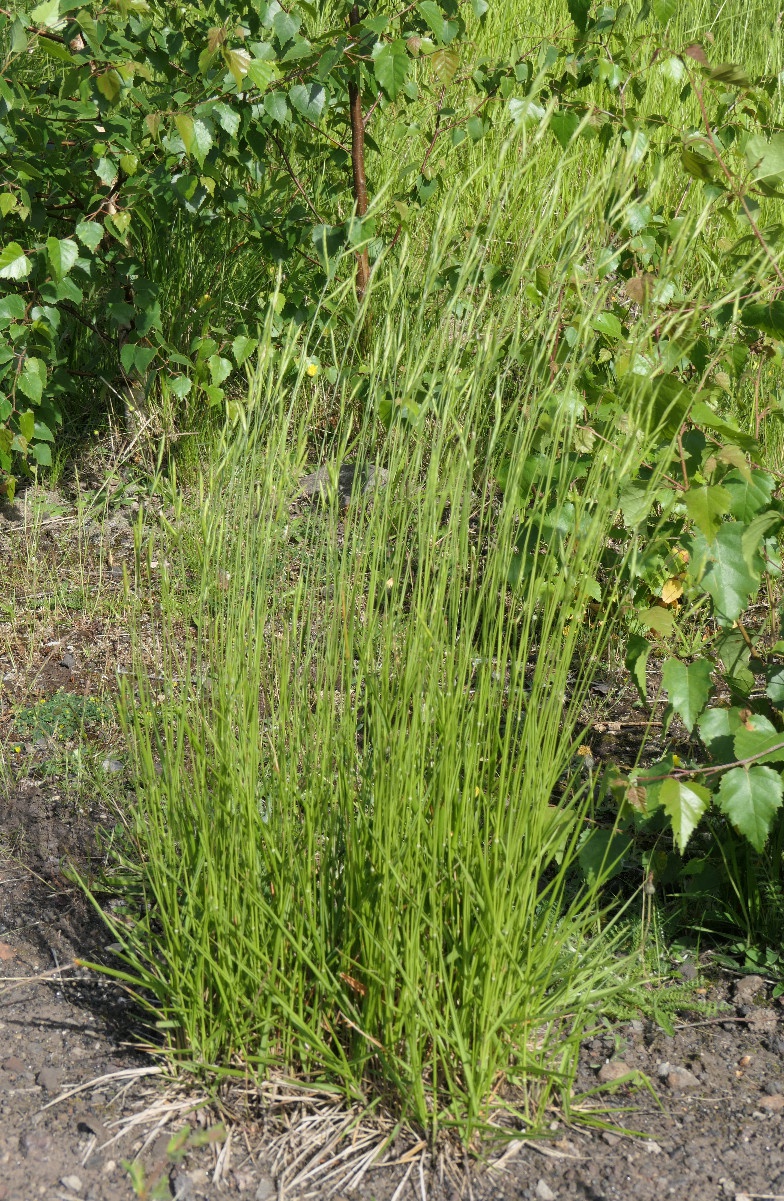
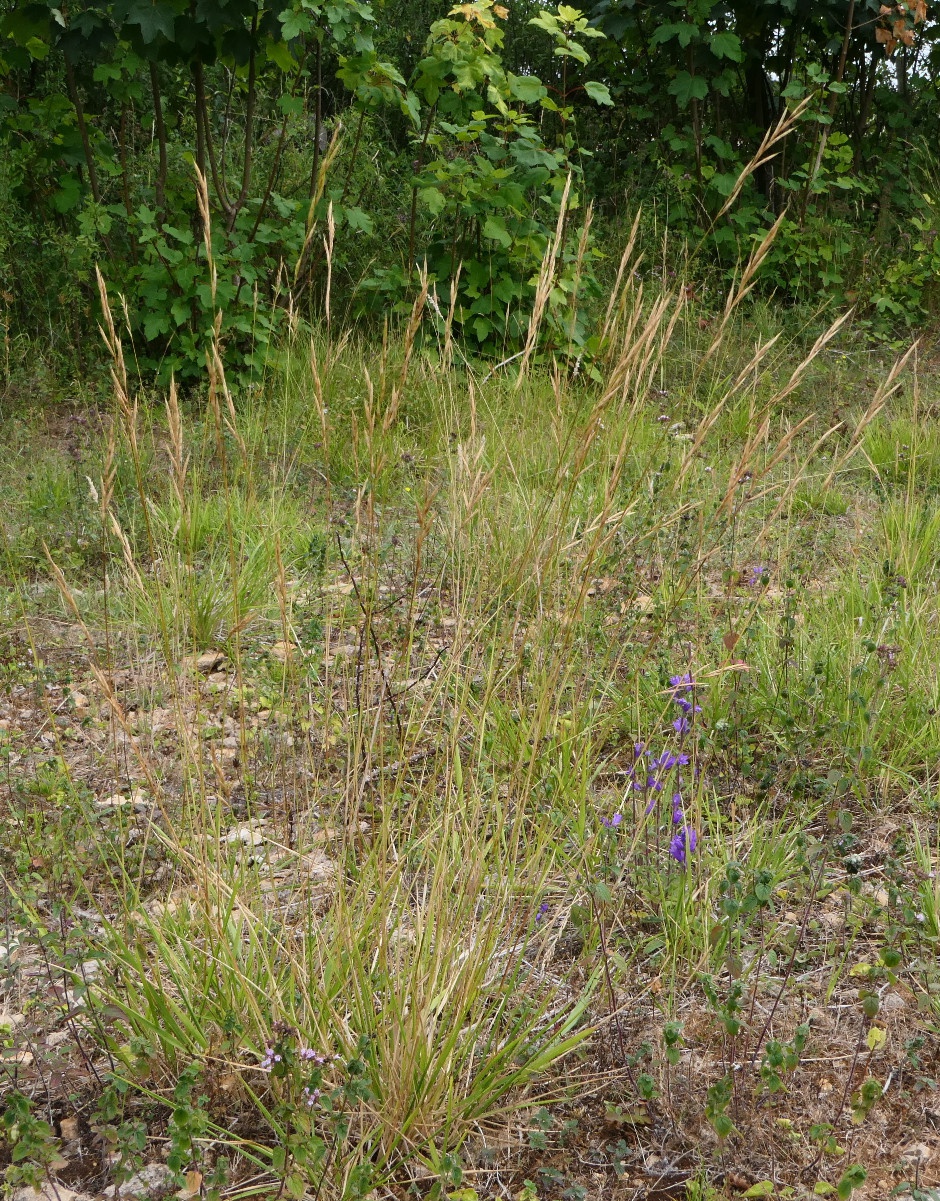
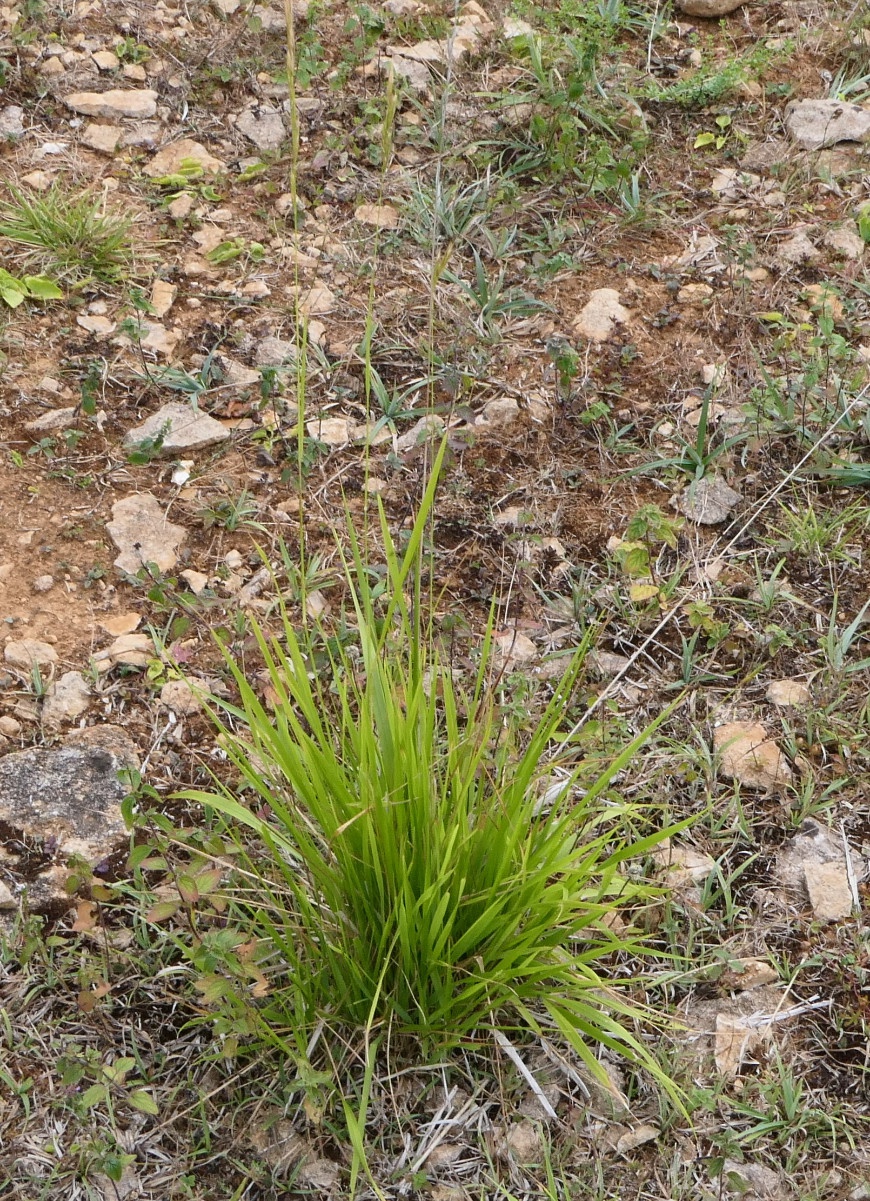
A tufted grass to 120 cm, which is almost hairless, spreading by creeping, wiry rhizomes. The leaves are usually under 5 mm wide, flat when fresh, and with very short ligules. Spikelets sessile, alternating, with short awns. Sheaths and spikelets usually hairy.
There are two very similar species, which have only just been separated: Brachypodium pinnatum (Heath False-brome) and Brachypodium rupestre (Tor-grass). The only reliable distinction between is the presence of abundant minute prickle hairs on the veins of the lower surface on B pinnatum. B rupestre has very few prickle-hairs, and leaves are usually inrolled even when fresh, with a longer ligule, and usually glabrous sheaths and spikelets.

Photograph the whole plant in habitat. If you have not examined a specimen in detail, record it as this. If you have identified either B rupestre or B pinnatum sensu stricto, it must be confirmed from a specimen by an expert before submission to Naturespot
Tor-grass is strongly associated with calcareous grassland. Heath False-brome is found in a wider range of habitats, including scrub, open woodland and grasslands on clayey soils.
Flowering in July.
Perennial.
 Steve Mathers
Bloody Oaks Quarry
05/07/2017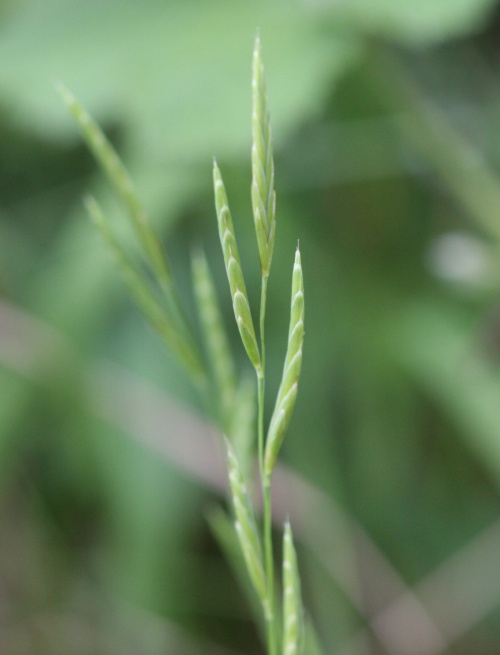 David Nicholls
Bloody Oaks
02 July 2015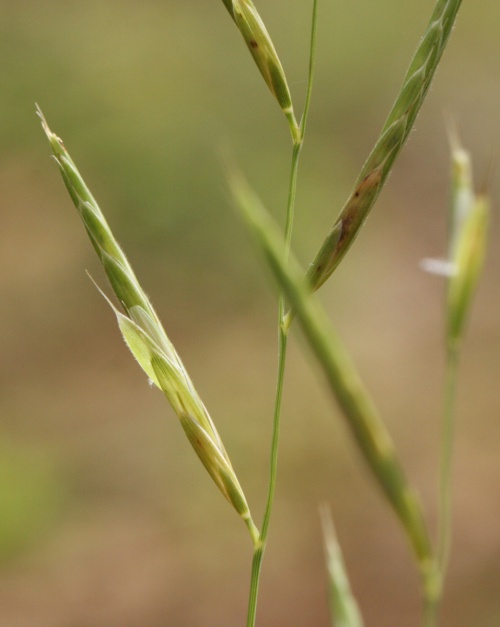 David Nicholls
Bloody Oaks Quarry
08 July 2016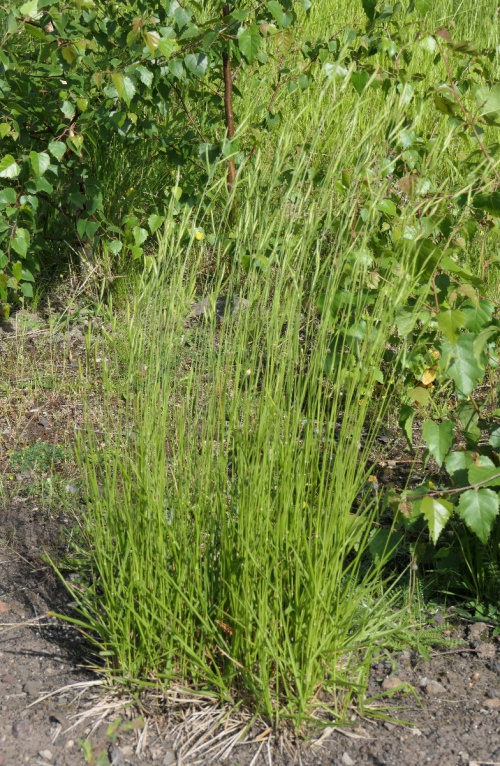 David Nicholls
Asfordby Hill
28 June 2019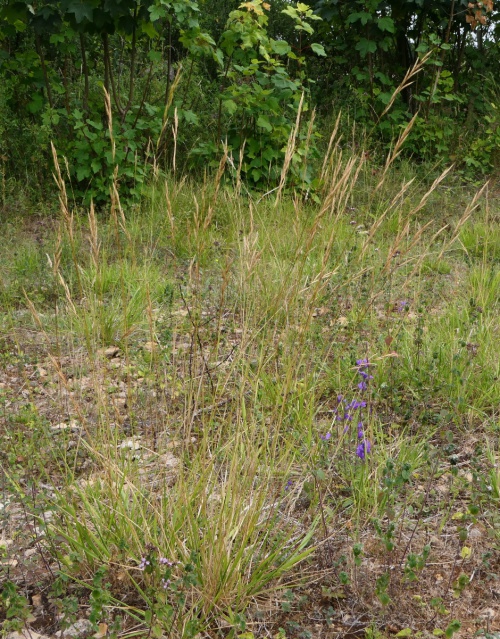 David Nicholls
Bloody Oaks Quarry
04 August 2018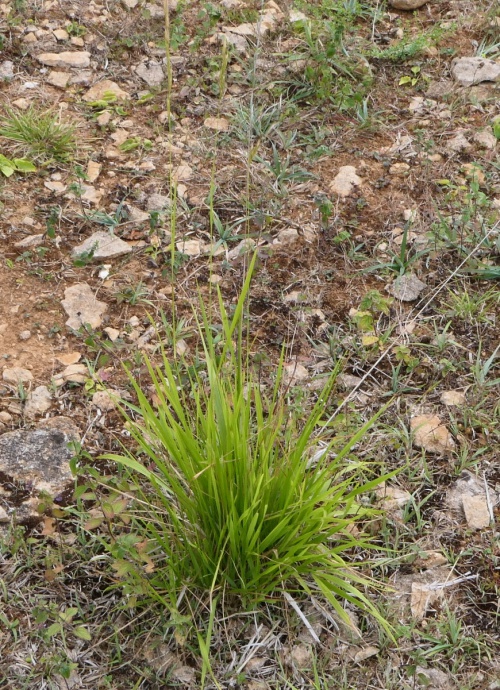 David Nicholls
Bloody Oaks Quarry
04 August 2018
Leicestershire & Rutland Map
Enter a town or village to see local records
MAP KEY:
Yellow squares = NBN records (all known data)
Coloured squares = NatureSpot records: 2025+ | 2020-2024 | pre-2020
UK Map
Additional images